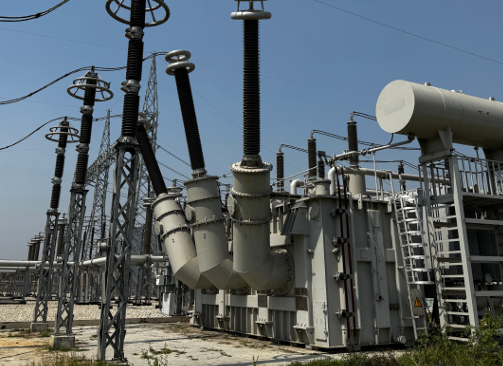



The benefits of monitoring PD in Bushings with TOTUS
Early detection of PD can significantly improve risk diagnosis, driving quick and accurate decision making.
Analyzing the PD Pattern and correlating it with other
parameters makes it possible to understand the nature
of the defect and determine the best technical actions.
Why monitor PD?
In over 70% of cases monitored by Camlin PD
was a factor, often in early stages.
Camlin bushing monitor including PD can identify:
- Capacitance short circuits
- Arcing
- Defects in the C2
- Internal contamination
- Surface tracking
- Internal cavities in RIP insulation
Online PD monitoring can:
- Detect anomalies at EARLY stage of degradation, in particular on RIP bushings
- Detect failures not easily detectable with standard tests
- Correlated PD with leakage current to determine failure mode and indicate appropriate offline test
Data:
- Simultaneous Data Collection
- Online Leakage Current
- Online Load
- Online Partial Discharges
- Online Arcing
- Online Temperature
- Data correlation and Information
- A high energy partial Discharge has occured at the exact same instant of leakage current step increase in phase A
- Application of Knowledge
- In case of a short circuit between internal layers the current detected at the bushing can increase and partial discharges or arcing events could occur during the breakdown
- Perscriptive Action
- Due to the samll change in the leakage current the capacitance test could be challenging: it is sugfgested to take an oil sample and test DGA
Decision
Acetylene >70 ppm confirms arcing activity detected by online monitor -> Replace bushing

This article was originally published in the October 2021 issue of the For the Love of Bushings: Critical Materials & Components magazine.
View Magazine