



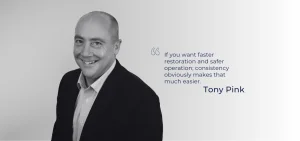





If you want faster restoration and safer operation; consistency obviously makes that much easier.
Alan Ross: Tony, it is good to talk to you again. It was great to see you at the grand opening of your new facility. One of the things that impressed me most was the connection between Dynamic Ratings and Wilson Transformer. You had the second and third generations of Wilson Transformer there, which I thought was incredible. It speaks to the idea that the pedigree for Dynamic Ratings is now bigger than just Dynamic Ratings – it is also the pedigree that Wilson Transformer brings. Talk a little bit about that and what it means to you.
Tony Pink: Sure. The start of Wilson Transformer goes back to Jack Wilson, who founded the company in 1933. Then Robert took over from him and grew the business quite dramatically. When I left my previous employer in 2002, I ended up meeting Robert, and we came up with the idea to start Dynamic Ratings in the U.S. They had just started the Dynamic Ratings monitoring and control business in Australia. I offered to give Dynamic Ratings a ‘rocket start’ in the U.S. market, which we successfully did. Now, I manage Dynamic Ratings globally as a wholly owned division of Wilson Transformer. And as of the grand opening date, we made the transition from Robert – who was second generation – to Ed, who is now managing the Wilson businesses including Dynamic Ratings.
Alan: How did you prepare the organization for the leadership leap you’ve had to make at DR? Add the global aspect and everything changes. You must have people ready to handle a global footprint. Talk a little bit about that.
Tony: We have a team of about twenty employees in Australia. We have a couple of people in Europe and one person in Latin America. We’re looking at expanding into Asia in the new year.

As far as how we’ve grown the management team, I recently finished reading a book I would highly recommend – Team of Teams by General McChrystal. It does an outstanding job of explaining the importance of teams interacting – not just excelling within silos but collaborating to get better results across the entire business. The final chapter discusses the leadership philosophy of being a farmer. That fits our organization well because I’m always trying to grow new talent in the business.
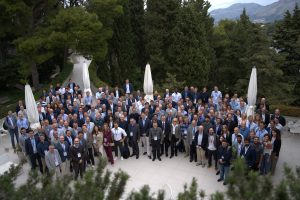
You may have noticed during the grand opening that we had four universities represented. They were each talking about how we’re currently interacting with them. During the tour, we also discussed the senior design groups we collaborate with and other projects we do with the universities. It is important to get students interested in the power industry. It gives us an opportunity to work with them even before they graduate. Now I have a constant pipeline of talent coming into the business that we can bring up to speed. It takes time to get that pipeline started, but now that it’s rolling – and has been for years – it has been an outstanding success, fueling our growth.

Alan: That’s excellent. Growing globally adds a new level of complexity. How do you plan on addressing that?
Tony: We do a lot of sharing of best practices across our geographic locations. One of our recent hires is based in Germany. He is here in the U.S. for full induction training. Once he reaches the competency level we need, he will return to Germany and start another satellite location for us there.
We frequently exchange people. Two days after the grand opening, I flew to Australia, spent three days there, and came back. International travel to ensure we’re doing the right things and leveraging global best practices is simply part of our culture.
Alan: Talk a little bit about the addition of the cabinet business and what it means to your customers.
Tony: Our vision is to help our customers develop more reliable electrical asset systems. That starts with the development of the products, but we also recognize that a box or a control on its own is not the full solution. Very early on, we started with field service groups to make sure we could go out, commission the equipment, and ensure everything was working the way the utility or industrial account needed it to work in their overall system.
Utilities and industrial accounts have great people who know how to commission transformers, but there is a big difference between knowing how to hang radiators and set bushings versus knowing how to make the instrument work. So, we brought that piece in very early. Then we started recognizing that part of the challenge is the way the monitor collects data. You get an alarm, and you don’t know if the anomaly exists because the equipment was installed or configured differently, or because the asset itself is not working correctly.

We recognized – especially with AI – that consistency is key. To help utilities maintain consistency, service was part of the solution, but now we’ve taken it a step further. We are designing and manufacturing the complete transformer control cabinet that goes on the transformer, providing even more consistency from a monitoring perspective.
Another major advantage is safety. Your fleet might have eight or ten different transformer brands. Each one uses different components, represents things differently in diagrams, and approaches logic differently. All that variability makes it harder to understand and interact with the equipment, slows you down, and creates the opportunity for mistakes. If you want faster restoration and safer operation, consistency obviously makes that objective much easier.
I think the thing that sets us apart is we understand what the customer is trying to achieve, and we are designing everything around that.

Alan: The value or competitive advantage that DR brings is unique. What is the customer value for the cabinet business?
Tony: I think what sets us apart is that we understand what the customer is trying to achieve, and we design everything around that. For example, in the control cabinet business, we were recently talking to one of the transformer factories. They challenged us: “How do you know you’re leaving enough space when you put the conduit cutouts in the bottom and bring your cables in? How do you know there’s enough space so people can easily work in the cabinet?”
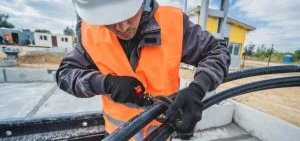
With the way the factory is set up now, we’re doing prefab inside the building. We cut the conduit openings, build and prebend all the conduit, and land the cables as one large assembly. We ship that entire assembly out to be installed on the transformer, reducing onsite time – especially when installing after the equipment is in service.
All that knowledge flows back to our cabinet designers, so they can see firsthand not just the cabinet but how it looks installed, with all wires terminated. If there are issues, that feedback goes immediately back into the system. That reflects the team of teams concept – if I have the best cabinet in the world but poor communication between the design team and the installers, the true best practice is never realized. When those teams collaborate, you get a much better product in the end.


This article was originally published in the February 2026 issue of the Advanced Diagnostics & Analytics magazine.
View Magazine


