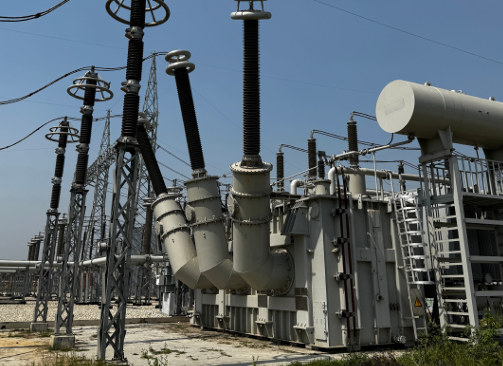









The greenhouse gas emissions associated with raw material extraction, processing, and component fabrication represents a significant portion of a transformer’s lifecycle footprint.
Sustainability Meets Asset Management
Sustainability has moved from a corporate aspiration to a regulatory, financial, and operational imperative for the power sector. Asset owners will be increasingly judged not only on reliability and cost, but also on carbon intensity, resource efficiency, and environmental stewardship. Against this backdrop, transformers which are among the most capital-intensive and long-lived assets in the grid, occupy a unique position.
Historically, transformer management has focused on reliability and risk mitigation. While these remain paramount, a broader perspective is now emerging – how transformer online condition monitoring (OCM) can actively support sustainability objectives. This article explores how transformer OCM functions as a strategic sustainability lever, linking technical asset health data to environmental, economic, and social outcomes.
Sustainability in the Context of Transformers
Lifecycle Perspective
A meaningful assessment of transformer sustainability requires a full lifecycle perspective, extending beyond operation to include manufacturing, design choices, material selection, maintenance, refurbishment, and end-of-life management. Each of these phases presents opportunities for OCM to reduce environmental impact and improve resource efficiency.
At the manufacturing and design stage, embedded carbon – the greenhouse gas emissions associated with raw material extraction, processing, and component fabrication represents a significant portion of a transformer’s lifecycle footprint.
While operational emissions often dominate over decades of service, the emissions tied to materials such as steel, copper, and insulation are non-trivial and sensitive to design choices made at specification time, highlights how transformer specification and capitalization factors influence the lifecycle carbon footprint.
Specifically, adjustments in technical specifications such as target loss values, core and conductor materials, and insulation systems directly affect not only energy performance but also total lifecycle emissions (tCO₂ equivalent). In the 50–62.5 MVA case study [1], different specification pathways produced materially different carbon footprints when accounting for both life-cycle cost and emissions.
Moreover, transformer designs incorporating advanced insulation systems or semi-hybrid configurations can further reduce material usage without sacrificing performance. Such designs may permit higher operating temperatures or reduced core and winding masses, thereby reducing the material carbon footprint while still achieving favourable operational efficiency [2].
Arguably so far, the most impactful phase from a carbon perspective, is the operational phase. Operational carbon emissions are those associated with energy losses and auxiliary consumption during transformer service. [3] highlights the limitations of traditional emissions reporting, which 0ften assumes a fixed reference temperature and static loss profile. Instead, the [3] advocates for temperature-based, real-time monitoring: recognizing that actual transformer resistance (and thus losses) varies with dynamic operating conditions. Temperature-based condition monitoring allows for far more accurate calculation of resistive losses and their associated greenhouse gas emissions, improving alignment with international reporting standards such as the GHG Protocol.
By incorporating real-world thermal and electrical behaviour, this methodology ensures that operational carbon reporting reflects true performance, not idealized assumptions. This not only enhances sustainability reporting credibility but also reinforces the case for condition-based decision making because emissions reduction becomes traceable to specific operating behaviours and mitigations.
An increasingly important element of the sustainability-focused maintenance toolkit is transformer oil reclamation. Insulating oil represents a significant consumable in oil-filled transformers, and replacing degraded oil with new virgin product incurs both material and carbon costs. A recent case study published in [4] quantifies the environmental benefits of reclaiming service-aged mineral oil compared with replacement using new oil.
Together with OCM insights, oil reclamation positions maintenance programs to deliver both reliability and sustainability dividends, reducing unnecessary waste, minimizing lifecycle emissions, and enhancing the overall resource efficiency of transformer service operations.
Finally, OCM influences end-of-life decisions by enabling planned, rather than forced, retirement [5]. Transformers that reach the end of their useful life can be removed in a controlled manner, allowing for oil recovery, material recycling, and environmentally responsible disposal. Avoiding catastrophic failures not only improves safety and reliability but also minimizes environmental contamination and maximizes recoverable value.
Beyond Operational Emissions
Sustainability discussions in the power sector have traditionally focused on operational emissions, particularly those associated with electricity generation. While decarbonizing generation remains essential, this narrow focus risks overlooking a substantial and growing contributor to environmental impact: the embodied emissions of network assets themselves. Transformers represent a significant concentration of material, energy, and carbon investment.
Premature replacement of transformers therefore has sustainability consequences that extend far beyond capital expenditure. Removing a transformer that remains electrically and mechanically sound effectively discards the embedded carbon invested during its manufacture, while simultaneously triggering new emissions associated with producing and installing a replacement unit.
OCM provides the technical foundation required to support this shift in perspective. By offering evidence-based insight into the actual health of transformer insulation, conductors, and auxiliary systems, OCM enables asset managers to confidently challenge age-based assumptions.
Transformers that reach the end of their useful life can be removed in a controlled manner, allowing for oil recovery, material recycling, and environmentally responsible disposal.
Transformer Online Condition Monitoring
Transformer OCM involves the continuous measurement of parameters that reflect the electrical, thermal, mechanical, and chemical state of the transformer. Typical monitored quantities include [6]:
- Oil and Winding temperatures.
- Voltages & Currents (loading).
- Dissolved Gas Analysis (DGA).
- Moisture in oil and paper.
- Bushing condition.
- Tap changer information.
- Partial discharge activity.
- Auxiliary devices such as fans/pumps, Buchholz relay, breathers etc.
- Other advanced parameters such as through faults, harmonics etc.
Raw measurements alone do not deliver value. The sustainability impact of condition monitoring emerges when data is transformed into insight through:
- Trending and rate-of-change analysis.
- Asset-specific baselining.
- Fleet benchmarking.
- Correlation with operating conditions.
Modern OCM platforms increasingly integrate multiple data streams into a single asset health view, supporting both technical and strategic decisions.
Core Sustainability Levers
Condition monitoring becomes a core sustainability lever when it shifts transformer management from reactive or age-based decisions to evidence-based lifecycle optimization. By continuously revealing the true thermal, chemical, and electrical condition of an asset, monitoring allows operators to safely extend service life, minimize unnecessary replacements, and target interventions only where they deliver real value.
Extending Asset Life
Traditional transformer replacement strategies often rely heavily on age. While age correlates loosely with condition, it is a poor predictor of actual remaining life. Many transformers operate reliably well beyond their nominal design life, while others fail prematurely due to specific stresses.
Condition monitoring enables condition-based life extension, allowing utilities to:
- Retain healthy assets longer
- Defer capital expenditure
- Avoid unnecessary scrapping of
- functional equipment.
Each deferred replacement represents avoided manufacturing emissions, reduced raw material consumption, and less waste.
Insulation Aging Management
Thermal and chemical aging of cellulose insulation is the dominant life-limiting mechanism in oil-filled transformers. Monitoring parameters such as hot-spot temperature, moisture, and key fault gases provides early visibility into accelerated aging.
With this insight, operators can:
- Adjust loading profiles
- Optimize cooling strategies
- Schedule oil treatment or drying
- Reduce thermal stress during peak conditions
These actions directly slow insulation degradation, extending transformer life and improving sustainability outcomes.
Operational Emissions as a Sustainability Metric
Transformer losses translate directly into additional generation requirements and associated emissions. While design losses are fixed, operational losses are influenced by condition and loading.
Condition monitoring helps identify:
- Overheating due to cooling system degradation
- Inefficient tap changer operation
- Persistent overload conditions
- Correct evaluation of operational losses.
By addressing these issues, end users can accurately report operational emissions.
Optimized Loading Through Insight
Real-time temperature and loading data allow operators to safely utilize transformer capacity without excessive aging. This avoids conservative derating while preventing harmful overloads.
Optimized loading contributes to sustainability by:
- Reducing the need for higher capacity assets.
- Improving utilization of existing assets.
- Sometimes reducing the need for parallel assets.

Condition monitoring becomes a core sustainability lever when it shifts transformer management from reactive or age-based decisions to evidence-based lifecycle optimization.

Early intervention often involves minor repairs rather than full replacement, preserving materials and minimizing environmental impact.
Early Fault Detection
Condition monitoring excels at identifying incipient faults long before they escalate. Examples include:
- DGA trends indicating localized overheating or arcing.
- Partial discharge patterns signalling insulation defects.
- Moisture ingress detected before excessive voltage breakdown reduction.
- And many others.
Early intervention often involves minor repairs rather than full replacement, preserving materials and minimizing environmental impact.
Linking Condition Data to ESG Metrics
Environmental, Social, and Governance (ESG) reporting increasingly requires defensible, databacked evidence. Transformer condition monitoring provides quantitative inputs that can support:
- Asset life extension claims
- Loss reduction initiatives
- Risk mitigation strategies
By connecting condition metrics with lifecycle assessment models, end users can translate technical actions into measurable sustainability outcomes.
Regulators and investors are demanding greater transparency regarding asset management decisions. Condition monitoring data strengthens the justification for deferring replacements or prioritizing refurbishment.
Supporting Digitalization, Analization, Analytics and AI-future
Modern OCM systems increasingly employ advanced analytics to identify subtle patterns across large fleets. These tools improve fault prediction accuracy and reduce false alarms. From a sustainability perspective, this means:
- fewer unnecessary interventions
- higher confidence in life-extension decisions
- reduced risk of unexpected failures
A transformer digital twin is a virtual, AI-driven replica of a physical transformer that continuously integrates design data, factory test results, and real-time OCM inputs to mirror the asset’s actual state. Unlike static thermal or aging models, a digital twin evolves with the transformer, updating its predictions as loading patterns, temperatures, moisture levels, and gas trends change.
Case Study: Sustainability Through Deferral
To illustrate how transformer OCM supports sustainability through lifecycle optimization, a case study for a 30 MVA, 132/22 kV oil-filled power transformer installed in a transmission substation and approaching the end of its expected economic life is presented in this section. The details of the transformer under investigation are as follows (Table 1):
| Parameter | Values | Parameter | Values |
| Rated Power | 20/30 MVA | Voltage | 132/23.33 kV |
| Manufacture Year | 1990 | Oil type | Mineral |
| Economic Life | 35 years | Replacement USD | $ 3,00,000 |
| Estimated embedded carbon of 30 MVA transformer | ~ 128 tCO2e |
By age alone, the transformer would be considered due for replacement at year 35. The economic life (depreciated book value life) of a transformer refers to the period over which the transformer’s capital cost is reduced on the owner’s financial statements through depreciation. It is an accounting concept, not a technical one. A commonly assigned book life of power transformers is 30-40 years [7] and depreciate the asset linearly or using regulated depreciation schedules.
However, once fully depreciated, the transformer may still run for years or decades, effectively delivering very low cost-of-service. Many fleets have transformers at 40–60 years [8] of age that are fully depreciated but still reliable due to good design, maintenance, and operating conditions.
OCM and laboratory testing provide the following insights as listed in Table 2.
| Parameter | Observed Value | Interpretation |
| Hot-spot temperature (average) | <70℃ | Within acceptable aging limits |
| Moisture in paper | <2% | Low-moderate, not life-limiting |
| Key DGA gases (H2, C2H2) | Stable trends | No active fault |
| CO/CO2 ratio | Acceptable trends | Routine paper degradation |
| Oil quality | Acceptable | Within acceptable aging limits |
| Bushing Online Monitoring | Stable trends | Bushing replaced after 23 years in service |
| Electrical Tests | Pass | Within acceptable test limits, conducted every 4 years |
Despite age-related indicators (e.g. furan presence ~0.7ppm), no acceler ating degradation mechanisms are observed. Using thermal aging models, remaining technical life (with managed loading) is calculated to be ~8–10 years. This shifts the “end of life” from 35 years to approximately 43-45 years, provided operating conditions remain monitored using OCM.
By offering evidence-based insight into the actual health of transformer insulation, conductors, and auxiliary systems, OCM enables asset managers to confidently challenge age-based assumptions.
Two replacement strategies are compared:
- Case A – Age-Based Replacement (Year 35)
- Immediate replacement CAPEX: USD $ 3,00,000
- Embedded carbon incurred immediately (new transformer): ~128 tCO2e.
- Scrap carbon incurred immediately (main materials): ~106 tCO2e.
- Scrap carbon incurred immediately (burning mineral oil & landfill): ~60 tCO2e.
- Other such as transportation of new, transportation of old unit not included.
- Case B – OCM-Based Deferral (Year 43)
- Life extension: 8 years
- CAPEX deferral value (at 5%, $5k/yr of monitoring costs): USD $47k
- Embedded carbon avoided immediately (new transformer + scrapping old unit): ~294 tCO2e.
- Optimised loading benefit could also be calculated!
By deferring replacement by 8 years, the end user achieves:
- Significant avoided embedded carbon.
- Reduced capital expenditure.
- Continued reliable operation. When replicated across a fleet, such decisions materially contribute to corporate sustainability targets with minimal operational risk.
As grids evolve to accommodate electrification, renewable generation, and decentralized resources, transformers will face new operating stresses, OCM will be essential not only for reliability, but also for ensuring that sustainability gains are not eroded by premature failures or inefficient operation.
Future developments are likely to include:
- Greater standardization of monitoring data.
- Deeper integration with asset management systems.
- Stronger linkage between condition metrics and lifecycle carbon accounting.
- Wider use of AI-driven decision support.
Challenges and Practical Considerations
While OCM is increasingly recognized as a powerful enabler of sustainable transformer management, translating its technical potential into real sustainability outcomes is not without challenges. One of the primary issues is data-to-decision translation. Many utilities collect large volumes of monitoring data but struggle to convert it into clear, risk-informed actions that support life extension or loss reduction. Without robust analytics, baselining, and interpretation frameworks, OCM risks becoming a data collection exercise rather than a sustainability tool.
Another challenge lies in economic justification. Sustainability benefits such as avoided embedded carbon or reduced environmental risk do not always appear directly in traditional financial metrics. As a result, OCM investments may be evaluated narrowly on short-term ROI rather than lifecycle value.
Organizational readiness presents an additional barrier. Effective use of OCM demands cross-functional alignment between asset management, operations, maintenance, and sustainability teams. If condition data is not integrated into planning and capital decision processes, its sustainability value remains unrealized.
Finally, there is the risk of alarm fatigue and overreaction. Overly sensitive alarms or poorly tuned thresholds can trigger unnecessary interventions, site visits, or even premature replacements, outcomes that run counter to sustainability goals.
In practice, achieving sustainability gains from OCM requires more than installing sensors. It calls for a structured approach combining good data, clear decision frameworks, skilled interpretation, and alignment with lifecycle and sustainability objectives. When these elements are in place, OCM can move from a technical add-on to a genuine driver of sustainable asset management.
Conclusion
Transformer condition monitoring is no longer just a technical safeguard; it is a strategic enabler of sustainability. By extending asset life, reporting losses, preventing environmental incidents, and supporting data-driven decisions, monitoring systems directly influence the environmental footprint of power networks.
For end users seeking practical, near term sustainability gains, few tools offer the same combination of technical rigor, economic justification, and environmental impact. In the transition to a low-carbon energy system, well-monitored transformers are not just reliable assets: they are sustainable ones.
The numerical case illustration demonstrates how OCM decision making delivers tangible sustainability and financial outcomes. When technical end-of-life is evaluated using real condition data rather than age alone, end users can align economic and environmental objectives.
References:
[1] B. P. Das & R. Milledge, “Investigating the impact of transformer specification on the life cycle carbon emissions: A case study for Middle East Countries”, Transformers Magazine, Vol. 9 No. 3, 2022.
[2] B. P. Das & G. Kablouti, “Analysing transformer energy and material efficiency under different renewable energy deployment pathways”, Transformers Magazine, Vol. 10 No. 4, 2023.
[3] B. P. Das, “Accurate operational carbon emission of transformers using condition monitoring”, Transformers Magazine, Vol. 12, No. SE2, 2025.
[4] B. P. Das et.al, “Investigating the environmental benefits of oil reclamation – A case study”, Transformers Magazine, Vol. 11, No. 3, 2024.
[5] B. P. Das et.al, “Aligning the economic and technical end of transformer life using online condition monitoring”, Transformers Magazine, Vol. 12, No. 4, 2025.
[6] CIGRE WG A2.27, Brochure 343, “Recommendations for Condition Monitoring and Condition Assessment Facilities for Transformers”, 2008.
[7] CIGRE WG A2.56, Brochure 971, “Transformer Efficiency”, 2025.
[8] CIGRE WG A2.62, Brochure 939, “Analysis of AC Transformer Reliability”, 2024

Dr. Bhaba P. Das is the Regional Manager (Asia Pacific) for Dynamic Ratings Australia, based in Wellington, New Zealand. He is a Senior Member of IEEE, Young Professional of IEC, Member CIGRE NZ A2 panel, Member of Engineering New Zealand. He has published 40+ technical articles in various peer reviewed international journals and magazines. He is a member of CIGRE working groups A2 D1.67 and CIGRE A2/C3.70 as well part of the Standards Australia EL008 Transformers Committee. He is also part of the advisory board for FAN project at University of Canterbury (NZ) and represents Dynamic Ratings at the Transformer Innovation Centre, University of Queensland, Australia. He has three patents in New Zealand & Australia related to condition monitoring. He has recieved the Hitachi Energy Global Transformer Excellence Awards in 2020, 2021 and 2023 and New Zealand Young Engineer of the Year 2017 by Electricity Association of NZ. He has previously worked at Hitachi Energy Transformers Business Unit in Singapore & ETEL Transformers Ltd in Auckland, New Zealand. He completed his PhD in Electrical Engineering from the University of Canterbury, New Zealand and Bachelors Degree in Electrical Engineering from University of Gauhati, Assam, India.

This article was originally published in the September 2026 issue of the Innovations In Insulation Systems magazine.
View Magazine