











Old Transformers, New Demands: What Dissolved Gas Analysis Can and Can’t Tell You
A transformer ordered today may not arrive for years. The one already in service is carrying loads its designers never imagined. For utilities, that combination has turned a decades-old diagnostic into a front-line decision tool: dissolved gas analysis (DGA).
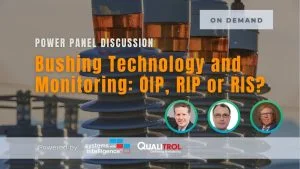
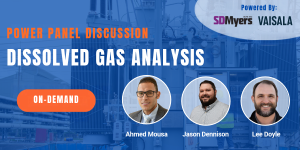
In the Power Panel Discussion on Dissolved Gas Analysis, moderator Alan Ross of APC Media was joined by three people who see DGA from different sides. Lee Doyle leads Vaisala’s North American power business and has also presented practical guidance on getting the most from online DGA. Jason Dennison directs diagnostic and analytical services at SDMyers, where lab results become recommendations for customers. Ahmed Mousa brings more than 22 years of utility experience, much of it on the operations and planning side.
Why a mature technique is suddenly urgent
The gases themselves haven’t changed. The pressure on the asset has.
Mousa described a fleet being asked to do more than ever. Heat waves last longer. Electric vehicles connect when load once eased. Data centers add sharp, AI-driven spikes. Generation is being added back, with the step-up transformers that come with it. Add retirements of experienced staff and replacement lead times that Dennison put at 36 to 48 months, and the logic is hard to miss. In Mousa’s words: “If you have a transformer now, keep it forever.”
His analogy for the shift is a car. “If you have an old car, you were very lucky if you had the check engine light on, that something is wrong. Now, the cars, like, they just talk too much. They tell you everything.”
Not “is the value high?” but “what is it doing?”
Doyle described a change in how practitioners read the data. The question is moving away from whether a gas reading is high and toward how it behaves over time. He recalled monitoring old transformers carrying plenty of gas that were fine, while newer units can show a sudden gassing event. Dennison’s reply was brief: “They’re just old.”
That distinction connects to a bigger goal: moving from time-based to condition-based maintenance. The same theme runs through an earlier APC Media session on monitoring, diagnostics and reliability. For readers weighing how much monitoring a fleet can justify, a Transformer Technology feature on bridging the gap in online DGA monitoring looks at the balance between cost and diagnostic coverage. The panel explored what it takes to make that shift in practice, and why a reading with no context can mislead as easily as inform.
The data is arriving faster than the expertise
Dennison noted that many transformers in SDMyers’ database are still tested only once a year, while a smaller share are monitored more often. He described a recurring gap: people responsible for uptime who lack the domain expertise to know what the numbers mean. Doyle pointed to experienced engineers retiring and newer staff asking not just for data, but for help using it.
Ross added an organizational angle: who has responsibility for a transformer, who has authority over its budget, and why that split has historically left asset health under-funded. The discussion also covered how methods have evolved, from key gas analysis through the ratio methods to the Duval triangles and pentagons, and what the panelists see as the practical difference between them.

Two questions without easy answers
Two audience questions pushed the panel into newer territory.
The first concerned natural and synthetic ester fluids under the heavy, cyclical loading typical of data centers, and whether current interpretation guidance is adequate. Dennison’s answer was a careful mix of what carries over from mineral oil and what doesn’t, along with where the standards work stands. Doyle called it the new front for online monitoring. For background on how moisture complicates interpretation in these fluids, see Effects of Water on Dissolved Gas Analysis.
The second was about AI. Dennison warned that an AI tool “can very confidently tell you something wrong,” which he called the biggest single risk right now, while still seeing a bright future for data-driven models as better failure data accumulates. Mousa made the case for working with transformer and DGA experts rather than handing decisions to models alone.
Watch the full discussion
This article only sketches the conversation. The recording has the full exchanges, the examples from the lab and the control room, and the audience Q&A.
Panelist:


Lee Doyle is Senior Sales Manager & DGA Expert at Vaisala, leading its North American Power products sales team, with more than 15 years of experience in utility sales and engineering roles.
Jason Dennison is Director of Diagnostic Analytical Services at SDMyers, with more than 14 years of leadership experience in the electric power industry and expertise in transformer diagnostics, dielectric liquid analysis, and dissolved gas analysis.

Ahmed Mousa, Utility professional with over 22 years of experience, is an energy executive, innovator, and educator specializing in utility transformation, grid modernization, emerging technologies, and the future of energy systems.
