




The human involvement, the ‘human component’ could be seen as the most critical component of any transformer.
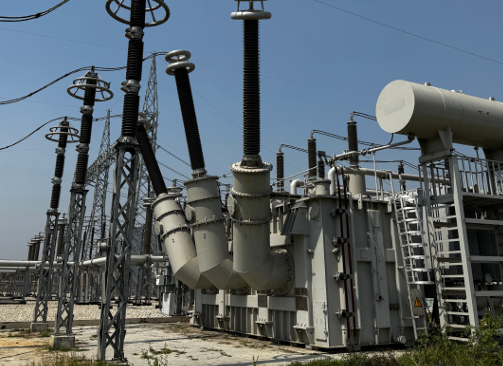
Transformers are complex devices, made up of components, pretty much any of which could cause the transformer to fail: from a leaky valve which lets all the insulating oil out, through to a bad tap changer or bad bushings. This does seem to mean that all of the components are, in their own way, critical for the continuing performance of the transformer! Having the ‘best’ components for our transformer is just a start: we also have to consider how to protect the transformer from outside influences, such as lightning, or animal incursion.
For many folks, transformers are ‘abstract’ devices, existing as an entry in a spreadsheet which also has a cell for a health index, or appearing as a block in a one-line diagram of the electric supply system. To make things ‘real’, we can use an analogy of something almost everyone is familiar with: a family car. Some components of the car are critical to its ability to perform its function of moving people around: the engine, the tires, the transmission, the steering and so on. But some components are less critical: the seats, the air conditioning, the wipers, for example.
But with a family car, we know that its performance will also degrade as a consequence of bad driving, poor manufacture, poor roads, poor maintenance (not putting air in deflating tires or adding coolant to the engine cooling system) – things which have a very human element to them. And there is a parallel with power transformers: did we build a good transformer, using witness tests in the factory; did we meet the specification; has the unit been maintained appropriately and in a timely manner; has it been inspected, tested and assessed regularly?
What we are describing now are ‘critical activities’ related to a transformer rather than components of a transformer, activities which could have high impact on performance, and where there is human involvement throughout, with the possibility of bad outcomes at every stage. Thus, the human involvement, the ‘human component’ could be seen as the most critical component of any transformer.
As examples, here are some cases where a better outcome could have resulted if things had been managed differently:
- A transformer which failed in service after mechanical damage to the windings – which may not have deteriorated in the field if the factory witness testing and inspections had identified misaligned block supports beneath the winding that were installed during manufacture.
- A transformer which fell off a truck while being transported to site – requiring a return to the manufacturer and a rebuild. What’s going to fill the hole that transformer was supposed to fill? And with lead times increasing, what are the contingency plans?
- During routine testing of a transformer, the bushing test taps were not replaced before re-energization: fortunately, the resulting discharge at the test tap did not lead to bushing failure and likely transformer failure as a result.
- A bushing on a transmission transformer was monitored for several characteristics and indicated significant rise in leakage current magnitude over less than 36 hours – a rise of almost 20%. Alerts generated were not relayed to operations and maintenance teams: the bushing failed taking the transformer with it.
- An online DGA monitor generated an alert indicating a step rise in key diagnostic gases over a couple of hours after routine maintenance. An investigation found that during maintenance air had entered the coolers and caused an ‘air lock’ preventing flow of oil and allowing the transformer to overheat.
- After a bushing failure which did not lead to a fire, a transmission transformer showed signs of mechanical damage according to leakage impedance tests, but no such damage according to SFRA tests. The inconsistency in results meant that the transformer was kept out of service until it could be explained satisfactorily. It was found that two CTs on the tertiary winding had not been shorted correctly during recommissioning of the unit, leading to the ‘bad’ leakage impedance but not significantly impinging on the SFRA results (as the SFRA current is extremely low).

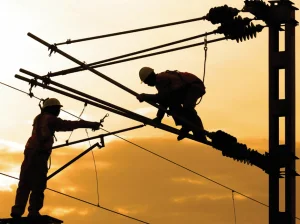
There are many more ‘stories’ which can be told, but what we have are not just critical components, but also critical activities. How do we address the human factors? Training, education and constant vigilance in terms of asset monitoring and assessment: we need people with both experience and expertise in their field, and with an ability to talk sensibly to both the tech folks and the spreadsheet folks.
Having the ‘best’ components for our transformer is just a start: we also have to consider how to protect the transformer from outside influences.
This all takes time, effort and commitment. There are critical activities which we can use to help identify deterioration and address it in a timely manner: maintenance, inspection and monitoring. The alternative is to make assumptions about transformer condition and viability which may not be justified, and to operate them without a closed feedback loop, leading to increased failure rates and operational disappointment. Generating data, and ultimately actionable intelligence, about transformers is, in the end, a highly critical activity.
With thanks to Richard Aguilar for his effective editing efforts.
Editor’s Note
One of the things I love about Tony McGrail’s contributions to our magazines or Power Panels is how he can make a complex problem and by using metaphors, usually something we easily understand, to get the point across.
With the current accelerating “brain drain” we see in the power industry, there is a new generation of engineers or skilled crafts people replacing them, and that new generation will need to learn about the changes going on in the power industry, quickly and how they learn will be the challenge.
This new generation will be much more tech savvy, adept at using visual learning and, will respond to the kind of writing that Tony is good at. Tony is also one of the best technical engineers I’ve worked with so he simplifies things, his way, to create an overall deeper understanding of complex issues. That is a great place to start training and development from. When technical knowledge is required, he has set the stage for that training and development, and at the end of the day, he has laid out the groundwork for gaining more detailed knowledge.
I have been in the power sector for decades and this one paragraph I loved: “But with a family car, we know that its performance will also degrade as a consequence of bad driving, poor manufacture, poor roads, poor maintenance (not putting air in deflating tires or adding coolant to the engine cooling system) – things which have a very human element to them. And there is a parallel with power transformers: did we build a good transformer, using witness tests in the factory; did we meet the specification; has the unit been maintained appropriately and in a timely manner; has it been inspected, tested and assessed regularly? “
Once again Tony, well done. Thank you.
Tony McGrail is Doble Engineering Company’s Solutions Director for Asset Management & Monitoring Technology, providing condition, criticality and risk analysis for utility companies. Previously Tony has spent over 10 years with National Grid in the UK and the US; he has been both a substation equipment specialist and subsequently substation asset manager, identifying risks and opportunities for investment in an aged infrastructure. Tony is a Fellow of the IET, a member of the IEEE, CIGRE, ASTM, ISO and the IAM, and is currently active on the Doble Client Committee on Asset and Maintenance Management and a contributor to SFRA, Condition Monitoring and Asset Manage ment standards. His initial degree was in Physics, supplemented by an MS and a PhD in EE followed by an MBA.


This article was originally published in the December 2025 issue of the Transformer Critical Components magazine.
View Magazine