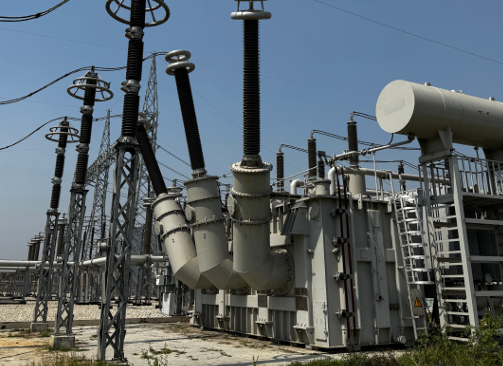













The US Electric Distribution Grid is the backbone of all other innovation that the country has delivered over decades. Our reliance on the power systems has increased to an extent where minutes of interruption can be crucial as it may interrupt internet connectivity while working from home or miss witnessing live a historic last minute touchdown in a Superbowl. Additionally, the grid has started to evolve in ways never imagined or planned such as bi-directional power flow from residential homes to mitigate peak demand by feeding power back to the Utilities. The increasing expectations of reliability and proliferation of Distributed Energy Resources has made it imperative to have near real-time know how of how the grid is operating.
The increasing expectations of reliability and proliferation of distributed energy resoruces has made it imperative to gave near real-time know-how of how the grid is operating.
The Rise of Secured Cloud Computing
With exponential advancements in virtualizing IT hardware in past few decades, the rise of Cloud Computing has come as an aid to utilities seeking to process and actionize high volume, variety, and velocity of data.
The advances towards auto-scaling IT infrastructure on Cloud means the thousands of intelligent devices – sensors, reclosers, automated switches can report data back to IT/OT systems without having to worry about constantly upgrading IT infrastructure.


Additionally, a Cloud deployed solution natively is “High Availability” by leveraging multiple geographic locations as hosting zones to protect from severe weather in one region.
Moreover, in case of large IOUs where there are multiple operating companies, a shared resources architecture can bring in immense cost-effectiveness towards IT investments. For smaller utilities like Munis and Co-ops who have limited IT resources in house, they can now focus on business applications and let the IT infrastructure piece handled as part of Cloud deployed solution.
Finally, a cloud centric approach supports consolidation of data from disparate sources and application of advanced analytics, which in the past had been constrained by complex system integration and limited IT hardware capacity on-premises. Advanced analytics and the cloud work beautifully together so new analytics possibilities will certainly be a foothold for cloud use within Utility operations IT systems. As per IDC’s IT/OT Convergence survey, over 30 percent of North American utilities prioritize the investment of cloud based operational data and analytics within their IT/OT related initiatives.
Challanges and Opportunities
Despite the progress that has been made, there are still some major challenges that need to be addressed to fully transition to a Cloud based paradigm. One challenge is ensuring data is as cybersecure on the Cloud as it is On-premises. While Cloud vendors such as Amazon and Microsoft go through a variety of compliance measures to meet requirements from standards relevant for the distribution grid such as NERC-CIP, FRED-RAMP, and ISO-27001, application providers must also go through stringent cybersecurity evaluation procedures. An industry standard would tremendously simplify and ease standards around solution acceptance prior to deploying on the Cloud.
Another challenge is the need to reassess regulatory frameworks in conjunction with FASB rules to support cloud investments as Capex. While FASB rules exist on how to structure contracts that allow capitalization, there needs to be clarity around which costs may be subject to deferral and do so in an objective manner. In addition, utilities must review the impact of these decisions on their financial indicators of performance. Therefore, a company wide look at cloud strategy would be crucial to ensuring not only true financial impact but also organization wide necessary change management to achieve successful transition. However, as Utilities deploy more systems on the Cloud and capture the value from those investments, we will see increasing adoption and streamlined compliance processes. In addition, there is growing regulatory support for transitioning to cloud-based OT/IT systems for the distribution grid and Utilities are starting to implement policies that support moving a subset of systems into the Cloud, and it is a matter of time when we would see a greater adoption.

The future holds exponential increase in adoption of cloud computing for distribution grid.
The Future of Cloud Computing for Distribution Grid
The future holds exponential increase in adoption of Cloud computing for distribution grid. The total cost of ownership has improved dramatically for cloud deployed solutions when compared to hosting on premises. While there are still challenges to overcome, with greater need to monitor the grid and analyze petabytes of data you need a system that can auto-scale with increase in the volume of data flowing in from the field.
To summarize, three key points to consider are:
- The importance of a companywide
- IT strategy and change management initiative.
- With increasing smart devices in the field, what will be the TCO on premises vs. Cloud?
- Collaboration with regulators to ensure cloud deployments are not disadvantaged due to capex and accounting rules.
We believe that there are a variety of applications in OT/IT that do not control or deenergize circuits and can therefore be a candidate to reside on the Cloud. Systems those can energize or deenergize circuits can be looked at in the future and migrated to cloud on a case-by-case basis. Let’s empower every department within the Utilities to leverage streaming of data from field devices and focus on business outcomes rather than spending majority of time worrying and implementing complex IT projects.

This article was originally published in the March 2024 issue of the Monitoring & Diagnostics: Technology, Data Science & AI magazine.
View Magazine