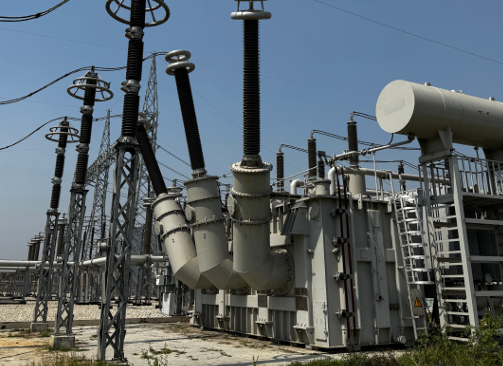













Ester dielectric fluids are no longer restricted to laboratory investigations and serve several transformers connected to the electric power network. Along with other technical aspects, it is also essential to understand the regeneration aspects of these alternative insulating liquids. Fuller’s earth is a popular and widely accepted adsorbent for regenerating mineral oils. The feasibility of using Fuller’s earth for ester dielectric liquids is reported in this article.
Introduction
Transformers are considered to be the most critical and expensive equipment in the power system network. In these important machines, the insulation system is composed of oil and paper. Mineral oils, derived from petroleum (non-biodegradable resources), are typically used in the power transformer industry. However, since the past few decades, ester dielectric liquids are being popular [1]. Due to the global warming, “sustainable development” has become a very important concept for the scientific community. The focus is now on harvesting renewable resources instead of depleting fossil fuels, and the use of more environmentally friendly materials. Ester fluids (biodegradable resources), which exhibit excellent thermal performance, enhanced fire safety and increased environmental protection, are foreseen as the workhorse for the decades to come.
It is no wonder that the most recent Paris climate accord (Paris Agreement) signed by 195 countries, dealing with the mitigation and adaptation of greenhouse gas emissions and the divestment
from fossil fuels, has spurred the exponential development of renewable energy-based technologies. This consequently calls for the need, demand and importance of ester liquids for use in transformer insulation systems. It is established that ester liquids favor longer service life of the solid insulation system while delivering high workability of the transformer [1].
Ester fluids (biodegradable resources), which exhibit excellent thermal performance, enhanced fire safety and increased environmental protection, are foreseen as the workhorse for the decades to come.
The global transformer technology involves billions of gallons of insulating liquid filled in the transformer tanks. It is known that mineral insulating oil degradation is reversible by appropriate treatment methods (regeneration, reconditioning, and re-refining). It is desirable that the degradation of ester liquids is also reversible. However, the information on the choice of liquid treatment is challenging and has not yet been entirely explored by the researchers. In addition to the choice of treatment, information on treatment method, treatment type and materials that are to be adopted, etc. is tremendous and stands challenging for the transformer owners. Although different approaches exist, Fuller’s earth treatment is a traditional practice of rejuvenating mineral insulating oils. Therefore, it is interesting to understand the feasibility of Fuller’s earth as an adsorbent for ester liquids. Regeneration is about removing the decay products (soluble and colloidal), so the type of decay particles needs to be known as this allows choosing the best regeneration method and adsorbent for ester liquids. This article discusses the results on some experimental studies
performed on the degradation and treatment of ester liquids. Some information on the factors to be considered for the regeneration of transformer liquids is also reported.
The global transformer technology involves billions of gallons of insulating liquid filled in the transformer tanks.
Regeneration of Transformer Liquids
Treatment of transformer liquids is a process carried out to rejuvenate the insulating liquid. Increase in aging is reflected by darker oil color that indicates polar contaminant (Table 1). The advantages include extended life of the insulating liquid, enhanced solid insulation performance, and improved workability of the insulation system [2]. It is to be recalled that the treatment of the in-service liquid includes regeneration (or reclamation) and reconditioning. Treatment of the liquid is performed with an aim to removing soluble and colloidal decay particles (regeneration), dissolved gasses and water (reconditioning). Regeneration is done when the decay concentration (acids, sludge, polar compounds, furans, and other oil/paper oxidation products) is high, while the liquid is expected to be in acceptable condition [2]. Reconditioning is performed when all the liquid parameters are within limits with having excess dissolved gasses or water. Regeneration involves one or a combination of several steps including, adsorbents, mechanical agitations, filtration and scavengers [2, 3]. Recondition involves dehydration, degassing, and vacuum systems. However, reconditioning is also performed along with regeneration. Also, the choice of treatment techniques depends on various factors including, the condition (ageing) of the oil-paper, the color of the liquid and other economic aspects.

The reclamation aspects of mineral insulating liquids used in liquid-filled electrical apparatus are reported in the IEEE standard C57.637 [2]. Presently, there is no established standard for the reclamation of ester liquids. However, very few authors reported the regeneration of esters with various adsorbents [3, 4]. The details of the adsorbents are not well discussed in the existing literature. However, high treatment temperatures influence the oxidation stability of natural ester liquids and exhibit a notable impact on the weight of the available antioxidants in the bulk of the liquid. To the best of the authors’ knowledge, this treatment temperature is not yet investigated by researchers or reported in the existing literature. The chemical composition of ester liquids is completely different from that of mineral oils. The aging processes in mineral oil and ester liquids are therefore completely different. Thus, there is a need to understand the nature of the decay particles before investigating the choice of treatment and other avenues of regeneration. This report presents the type of decay particles in ester liquids and the feasibility of Fuller’s earth for the regeneration of ester liquids.
Observations
Nature of Decay Particles
To know the type of aging byproducts in ester liquid vis-à-vis mineral insulating oils, accelerated thermal aging of mineral oil (MO), natural ester (NE), and synthetic ester (SE) was performed. The thermal aging was performed at 115°C, 150°C, and 175°C for two weeks each, thus totaling to six weeks of age in the presence of the kraft paper (cellulose) and catalyst. The aged liquids were subjected to mechanical agitation using a typical centrifuge as per ASTM D 1698. The illustration of the centrifuge treatment of aged liquid is shown in Figure 1. Due to the centrifuge force exerted on the colloidal decay particles, they moved to the tip of the centrifuge tube, thus allowing the separation between the colloidal and soluble particles in the liquids.

It was found that at lower aging conditions (115°C), mineral oil did not witness any colloidal particles. However, at 150°C and 175°C colloidal particles were noticed. In the case of ester liquids, the colloidal particles were not evident through the aging cycle. The view of the centrifuge tubes demonstrating the separation of colloidal particles is presented in Figure 2.

It was found that esters generate less sludge or colloids while having a high scope for the generation of soluble decay particles. However, it is challenging to comment that ester dissolves sludge or does not generate any sludge with degradation. Thus, one may understand that the treatment of esters may be mostly focused on the removal of soluble particles along with water and dissolved gasses. The detailed analysis of the results is reported by the author’s group in [6].
The changes in the concentration of dissolved decay contents in esters have not witnessed any significant change with the Fuller’s earth reclamation.
Regeneration of Ester Liquids Using Fuller’s Earth

Mineral oil (MO), natural ester (NE), and synthetic ester (SE) were aged as per ASTM D1934 under open beaker conditions in the presence of cellulose and catalyst. Thermal aging was performed at 115°C with an aging history at 500, 1000, and 1500 hours. To perform Fuller’s earth treatment as per ASTM D 7150, a laboratory-scale apparatus was fabricated, as shown in Figure 3. The authors have reported the complete details of the setup including the control unit in [4] and [7].
The treatment temperature is a vital parameter for the insulating liquid regeneration process. It is a major parameter that could decide the efficiency of the sorbent and the effectiveness of the treatment process. The sorption process (adsorption or absorption) is attributable to the sorbent’s surface properties. The surface properties of any sorbent are temperature dependent and vary based on the type of the decay products in the feed liquid. Thus, the aged liquids are reclaimed (using Fuller’s earth) at a treatment temperature of 70°C, 80°C, and 90°C. Before colloids appear in a liquid, the first sign is the drop in the interfacial tension (IFT) followed by an increase of the total acid number (TAN) and dissolved decay products (DDP) [8].
Dissolved Decay Products (DDP) and turbidity, which change with a larger rate than the IFT values, were investigated as alternative index for insulating oil degradation assessment. Since the TAN or IFT, which are used to reflect the oxidation performance of mineral oils [2], may not be suitable for esters, the reclaimed fluid is collected and tested for turbidity and UV spectroscopy to understand the level of reclamation and feasibility of Fuller’s earth for ester liquids. The changes in the turbidity and dissolved decay products for aged and treated (at different temperatures) liquids are presented in Figure 4.

It is seen that the turbidity values are increasing with aging. However, the turbidity is not reduced with reclamation, especially for the ester based liquids. It is noticed that the increase of turbidity is slightly less at 80°C of treatment temperature as compared to 70°C and 90°C. The changes in the concentration of dissolved decay contents in esters have not witnessed any significant change with the Fuller’s earth reclamation.
The regeneration avenues and possibilites of the regeneration of esters are still a challenge that needs to be explored.
Also, the selected range of treatment temperatures has the least influence on the reclamation of ester liquids. However, the reclamation of esters with Fuller’s earth is found unsatisfactory for the present experimental conditions. The detailed analysis of this study has been reported by the author’s group in [5]. Also, regeneration for natural esters in particular is challenging.
Conclusion
This report presents the results of the type of the decay particles and the feasibility of Fuller’s earth treatment for ester liquids. It is found that the soluble decay content mostly governs the degradation in ester liquids and the suitability of Fuller’s earth for ester liquids is questionable. The regeneration avenues and possibilities of the regeneration of esters are still a challenge that needs to be explored.
References:
[1] U. Mohan Rao, I. Fofana, T. Jaya, E. M. Rodriguez Celis, J. Jalbert and P. Picher, “Alternative Dielectric Fluids for Transformer Insulation System: Progress, Challenges, and Future Prospects,” IEEE Access, vol. 7, pp. 184552-184571, 2019
[2] IEEE Guide for the Reclamation of Mineral Insulating Oil and Criteria for Its Use. IEEE Standard C57.637-2015 (Revision of IEEE Standard 637-1985), 2015, pp. 1-141
[3] B. Ward, “Application of Filtration System for On-Line Oil Reclamation, Degassing, and Dehydration”, EPRI Report 1002046, September 2003
[4] U. Mohan Rao, I. Fofana, and J. S. N’cho. “On Some Imperative IEEE Standards for Usage of Natural Ester Liquids in Transformers.” IEEE Access, Vol. 8, pp: 145446-145456, 2020
[5] H. M. Wilhelm, G. B. Stocco, and S. G. Batista, ”Reclaiming
of inservice natural ester based insulating fluids,” IEEE Trans. Dielectrics Electr. Insul., vol. 20, no. 1, pp. 128-134, Feb. 2013
[6] L. Loiselle, U. Mohan Rao, I. Fofana, and T. Jaya, “Monitoring colloidal and dissolved decay particles in ester dielectric fluids,” IEEE Transactions on Dielectrics and Electrical Insulation, vol. 27, no. 5, pp. 1516-1524, Oct. 2020
[7] I. Fofana, B. Yohan, G. Marie Pier, T. Jonathan, L. Loiselle, K. M. L. Yapi, and U. Mohan Rao “Fullers Earth Treatment for Esters Liquids used in Power Apparatuses: Inferences and Arguments,” ENP Engineering Science Journal Vol. 1, No. 1, pp: 38-42, 2021
[8] Y. Hadjadj et al, “Assessing insulating oil degradation by means of turbidity and UV/VIS spectrophotometry measurements,” IEEE Trans. on Dielectr. Electr. Insul., vol. 22, no. 5, pp. 2653-2660, 2015

This article was originally published in the January 2022 issue of the Transformer Lifeblood: Oils & Fluids part 2 magazine.
View Magazine