

What are Geomagnetic Induces Currents (GICs)?
There are two kinds of solar activity that have the potential to disrupt our lives on earth: solar flares and coronal mass ejections (CMEs). Solar flares primarily impact communication and navigation systems while CMEs can impact the transmission grid.
Geomagnetic Induced Current (GIC) is the result of CMEs from the sun which interact with the earth’s magnetosphere through a process called electro magnetic induction, resulting in rapidly changing magnetic fields as the magnetic particles move across the earth’s surface.
Where do Geomagnetic Disturbances (GMD) occur?
- GMD events are just as likely to occur in the southern hemisphere as the northern hemisphere.
- Industry studies have identified that locations with latitudes above 45-50 degrees may be susceptible to GMD events.
- The probability of a GMD event increases based on the sunspot count, but GMD events can occur at any time during the solar cycle.
To better evaluate whether your transformers are at risk, read through the NERC
standard TPL-007.
What is the effect of GIC on transformers?
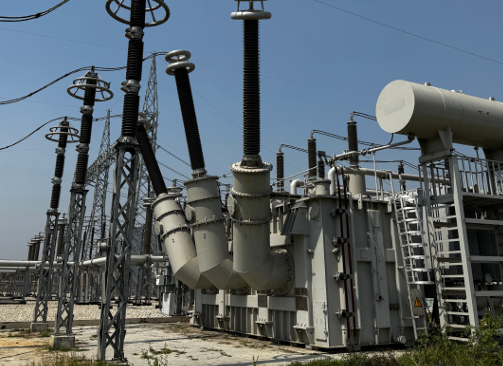
The flow of GIC in transformers is the root cause of all GMD related power system problems:
- The magnitude of the GIC current and the associated DC offset is superimposed on the excitation current which forces the transformer into part cycle saturation.
- GIC can result in increased reactive power requirements and large harmonic currents during GMD events.
- The harmonics can result in tripping of VAR compensation devices at times when additional VARS are needed, most resulting in system disturbances and instability. Large GMD events are often associated with a variety system alarms.
What causes Geomagnetic Induced Current (GIC)?
- CME is ejected from the sun and carried by solar winds.
- Magentic particles distributed across the Earth’s surface cause a rapidly changing magnetic field.
- The magnetic field interacts with the Earth’s conductivity, resulting in ground voltage differences.
- The flow of GIC is seen across transmission lines.
Are there any standards in place relating to GIC?
The increase in awareness of geomagnetic disturbance events has led to the creation of new standards in the U.S. including FERC order 830 which resulted in the creation of NERC standard TPL-007. The standard establishes guidelines on planning for geomagnetic disturbances.
All transmission owners and generator owners with grounded wye connected transformers, operating with a high side voltage of 200 kV or greater, are subject to the requirements of TPL-007. The standard requires owners to perform an assessment of their assets and collect GIC data to validate system modelling of GIC flow during GMDs.
How do I monitor for GIC?
Geomagnetic Induced Current Sensors installed on the transformer neutral conductor have the following benefits:
- Split core design allows easy installation.
- Range of the sensor can be easily adjusted.
- Hall affect sensor provides excellent response time and is linear over the entire operating range.
Measure Harmonics and VAR loading with the E3 Transformer Monitor to:
- Measure and calculate current wave-form harmonics.
- Measure the DC offset in the current waveform during through faults and system disturbances.
- Measure the VAR requirements of the transformer.
- The monitor operates with the latest industry standards.

Learn more about Dynamic Ratings monitoring options at https://dynamicratings.co/3mDhnFj.

This article was originally published in the February 2021 issue of the Overheating & Creative Solutions Cooling magazine.
View Magazine